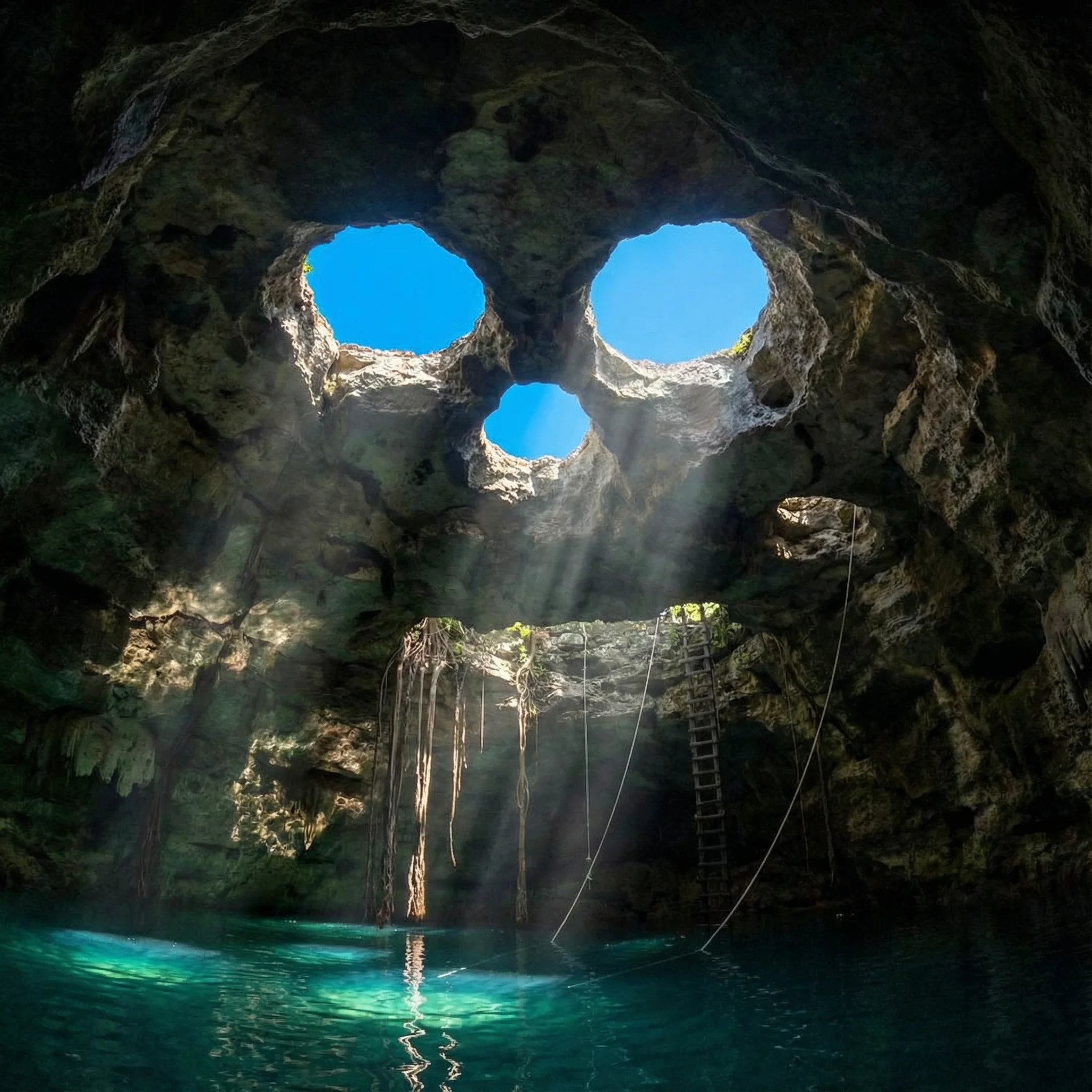
Tulum's underground cenote network represents one of the world's most unique geological phenomena, with hundreds of freshwater sinkholes, cave systems, and underground rivers.
Tulum's underground cenote network represents one of the world's most unique geological phenomena. These freshwater sinkholes, formed over millions of years through limestone dissolution, create an intricate system of caves, underground lakes, and rivers. The Riviera Maya contains the world's largest cenote network, with hundreds of cenotes ranging from small pools to vast underground lakes.
The word "cenote" derives from the Mayan "dzonot," meaning sacred well. For the ancient Mayan civilization, cenotes held profound spiritual significance, serving as sources of fresh water, ritual sites, and gateways to the underworld. Today, cenotes attract visitors seeking natural beauty, adventure, and connection to the region's geological and cultural heritage.
Understanding Cenote Geology
Cenotes form through a specific geological process. The Yucatan Peninsula consists primarily of porous limestone, which dissolves slowly through contact with slightly acidic rainwater. Over millennia, this dissolution creates underground caverns and tunnels. When cave ceilings collapse, they expose the underground water systems, creating cenotes.
The Riviera Maya's cenote network connects through underground rivers, creating a complex hydrological system. Water flows from inland cenotes toward the coast, eventually reaching the Caribbean Sea. This system provides the region's primary freshwater source, making cenotes essential to both ecology and human settlement.
Cenote water maintains consistent temperature year-round, typically 24-26 degrees Celsius (75-79 degrees Fahrenheit). This temperature stability results from the water's depth and the limestone's insulating properties.
Types of Cenotes
Cenotes vary dramatically in appearance and characteristics. Open cenotes feature large surface openings with direct sunlight access. These typically offer easy swimming and snorkeling. Semi-open cenotes have partial roof coverage, creating dramatic cave-like environments. Underground cenotes exist entirely within cave systems, requiring specialized equipment and guides for safe exploration.
Cenotes also vary in accessibility. Some feature developed facilities with stairs, platforms, and rental equipment. Others remain undeveloped, requiring hiking and swimming to access. This diversity ensures cenotes appeal to various experience levels.
Popular Cenotes Near Aldea Zama
Cenote Aldea Zama: The neighborhood's namesake cenote offers free access, crystal-clear waters, and jungle surroundings. Its proximity to vacation rentals makes it ideal for multiple visits during stays.
Cenote Dos Ojos: Located south of Tulum, this cenote system features two large open cenotes connected by underground passages. Snorkeling and diving opportunities showcase the cenote network's complexity.
Cenote Calavera: This cenote features a skull-shaped opening, creating distinctive visual appeal. The cenote's depth varies, accommodating swimmers and snorkelers of different abilities.
Cenote Zacil-Ha: This underground cenote exists entirely within a cave system. Visitors descend into the cave to access the cenote, creating adventurous experiences for those seeking more than typical swimming.
Activities in Cenotes
Swimming: Most cenotes permit swimming in designated areas. The cool, fresh water provides refreshing relief from Tulum's heat. Swimming in cenotes offers unique experiences unavailable in ocean environments.
Snorkeling: Many cenotes support snorkeling, with fish species and occasionally sea turtles inhabiting the waters. Visibility varies seasonally, with dry season (November-April) typically offering clearest conditions.
Diving: Certified divers can explore cenote systems through guided dives. These expeditions reveal underground geology, cave formations, and occasionally archaeological artifacts. Cenote diving requires specialized training and equipment.
Photography: Cenotes' dramatic geology and lighting create exceptional photography opportunities. The interplay of light and shadow in cave cenotes produces particularly striking images.
Safety Considerations
Cenote exploration requires respect for natural environments and awareness of potential hazards. Always swim with companions in cenotes, particularly in deeper sections. Respect warning signs and heed guide recommendations. Use reef-safe sunscreen to protect fragile cave ecosystems. Never touch stalactites or cave formations, as oils from hands damage these delicate structures.
For underwater activities, ensure proper training and certification before diving or snorkeling in cenotes. Follow guide instructions carefully, particularly in cave systems. Bring adequate lighting for underground cenotes, as natural light diminishes significantly.
Integrating Cenotes into Your Itinerary
For Aldea Zama vacation rental guests, cenote visits integrate easily into daily routines. Morning cenote swimming combines well with afternoon beach visits or archaeological site exploration. Many travelers establish regular cenote visits, experiencing different cenotes throughout their stays.
A typical cenote exploration itinerary might include: morning visit to Cenote Aldea Zama for swimming, lunch at nearby restaurants, afternoon snorkeling at a developed cenote, evening relaxation. This rhythm balances activity with cultural exploration.
Conclusion
Tulum's cenote network represents far more than tourist attractions. These geological wonders provide insight into the region's natural history, cultural significance, and ecological importance. Whether swimming in crystal-clear waters, exploring underground cave systems, or simply appreciating natural beauty, cenotes offer transformative experiences. For visitors to Aldea Zama, cenotes provide daily access to natural wonders that shaped Mayan civilization and continue defining the Riviera Maya's character.
Related Reading
Stay Updated
Get travel tips, local guides, and special offers for Aldea Zama guests.